

![[Logo: Substance Painter]](../../_static/banner_logos/substancepainter_logo.png)
Substance Painter#
This plugin integrates Prism into Adobe Substance 3D Painter.
Overview#
This integration enables users to import geometry files into Substance Painter, save and version their scenefiles and export textures to the Prism project folder.
Setup#
This plugin can be installed using the Prism Hub like any other plugin.
The plugin is available on Windows and MacOS.
When the plugin is loaded, the Prism integration needs to be added to the Substance Painter user settings folder.
%USERPROFILE%\Documents\Adobe\Adobe Substance 3D Painter.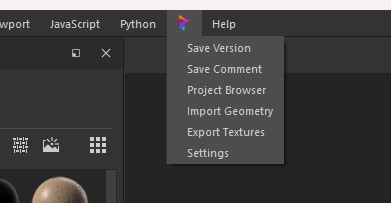
Importing Geometry#
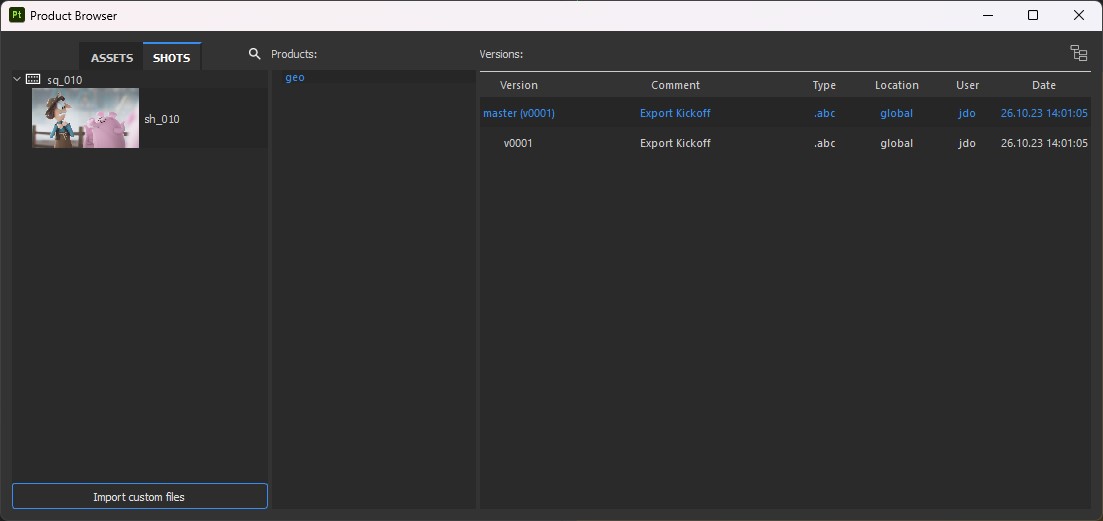
To import geometry from your Prism project into Substance Painter you can use the "Import Geometry" option from the Prism menu or rightclick a product version in the Project Browser and select "Import".
Saving Scenefiles#
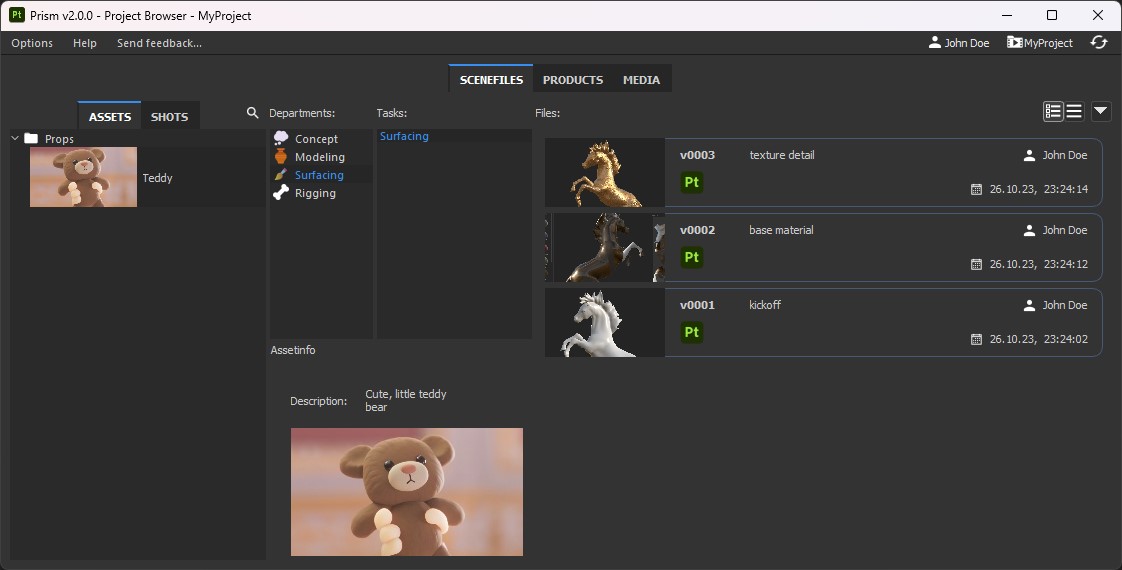
You can save new scenefile versions using the options in the Prism menu or by opening the Project Browser and selecting "Create new version from current" in the context menu in the "Scenefiles" tab.
Exporting Textures#
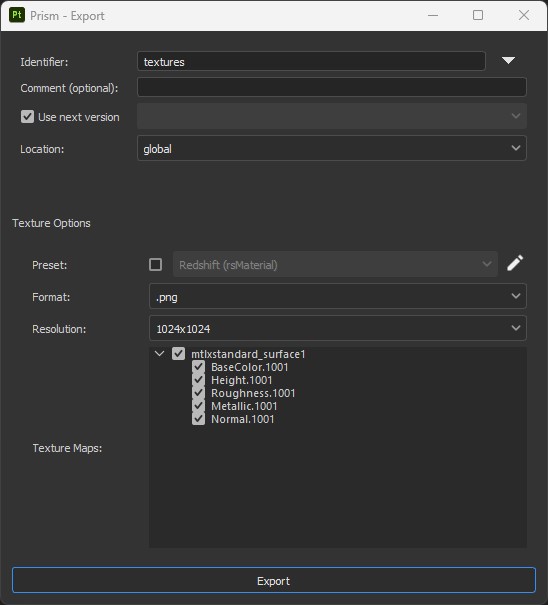
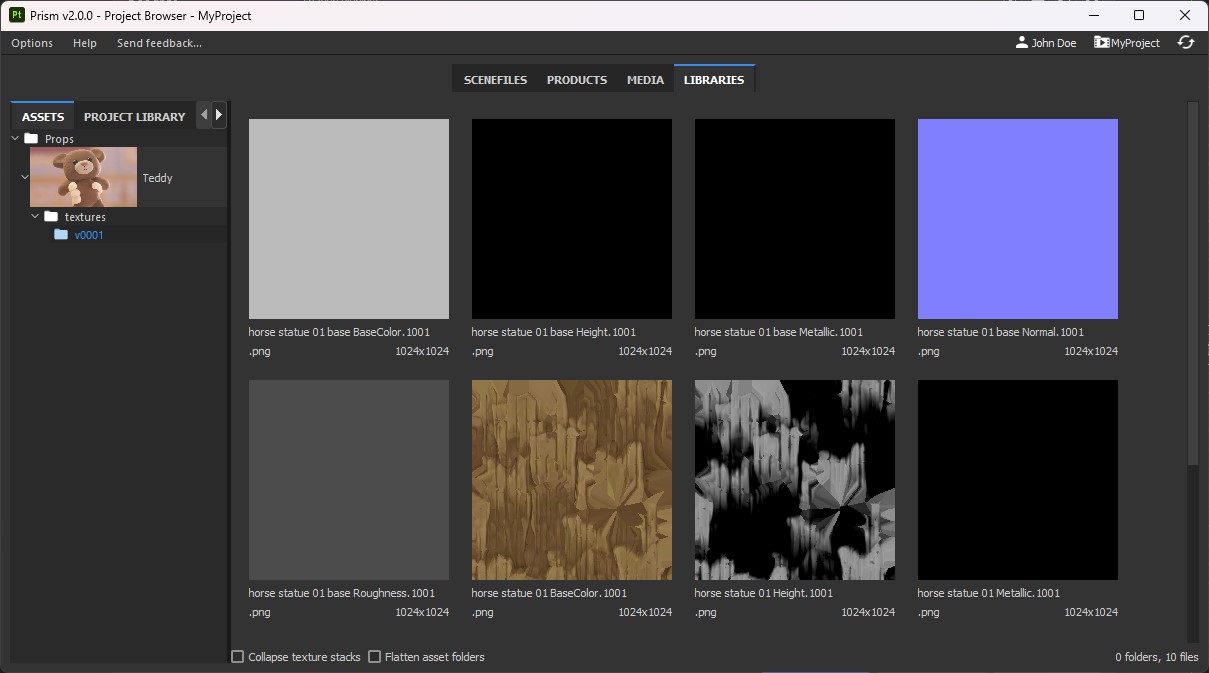
To export texture maps select the "Export Textures" option in the Prism menu.
Scene Building#
Access
Project Browser > Scenefiles tab > Files > Context menu > Build new SceneHint
Hold "Ctrl" and select "Build new Scene" to trigger a popup with all upcoming steps before execution.
Result
Scene Building Settings
Prism Settings > Project > Scene Building > Substance Painter![[Scene Building - Substance Painter Settings]](../../_static/plugins/substance-painter/SubstancePainter_SceneBuilding_Settings.png)
Hint
Additional steps can be added from the dropdown (1) list. Configure the step settings (Edit Settings...) using the "wheel" (2) icon. Enable or disable existing steps via the checkbox (3). Right-click any existing step to access options for removing it ("Remove") or changing its order (Move Up/Move Down).
Substance Painter Steps
Import Mesh: |
|
|---|---|
Description: |
Available products are imported.
If several products are available, only the first product found will be imported.
|
Apply to task: |
Specifies the Entity, Department, or Task for which the step should be executed.
The default selection is
*-*-*, meaning the step applies to all. |
Recommended Texturing Workflow
Further Reading
Alongside the Substance Painter specific information, additional details on Scene Building can be found on the Scene Building page.Adding Prism integration using environment variables#
It is possible to use environment variables to add the Prism integration to Substance Painter instead of adding the Prism integration into the Substance Painter User Preferences.
The following environment variables need to be defined:
PRISM_ROOT = C:\Program Files\Prism2
SUBSTANCE_PAINTER_PLUGINS_PATH = C:\ProgramData\Prism2\plugins\SubstancePainter\Integration
These environment variables can be set in the system settings.
plugins/PrismInit.py file with the following content:import os
import sys
os.environ["PRISM_ROOT"] = "C:\\Program Files\\Prism2"
def start_plugin():
prismInit()
def close_plugin():
global pcore
if pcore.appPlugin:
pcore.appPlugin.unregister()
def prismInit():
prismRoot = os.getenv("PRISM_ROOT")
scriptDir = os.path.join(prismRoot, "Scripts")
if scriptDir not in sys.path:
sys.path.append(scriptDir)
import PrismCore
import importlib
importlib.reload(PrismCore)
global pcore
pcore = PrismCore.PrismCore(app="SubstancePainter")
return pcore